
A teapot’s material changes how it heats, how it looks, and how you clean it. It does not magically turn a stale tea into a good one. Clay (including many unglazed or traditionally unglazed pots), glass, and enamel-lined or other official cast-iron pots are the three you will see most often in home shops. This guide compares them so you can buy one pot you will actually wash. It is a companion to teapots, infusers, and filters, not a replacement, and it does not invent lab results about “seasoning” or heavy metals. Official food-safe notes and linings win.
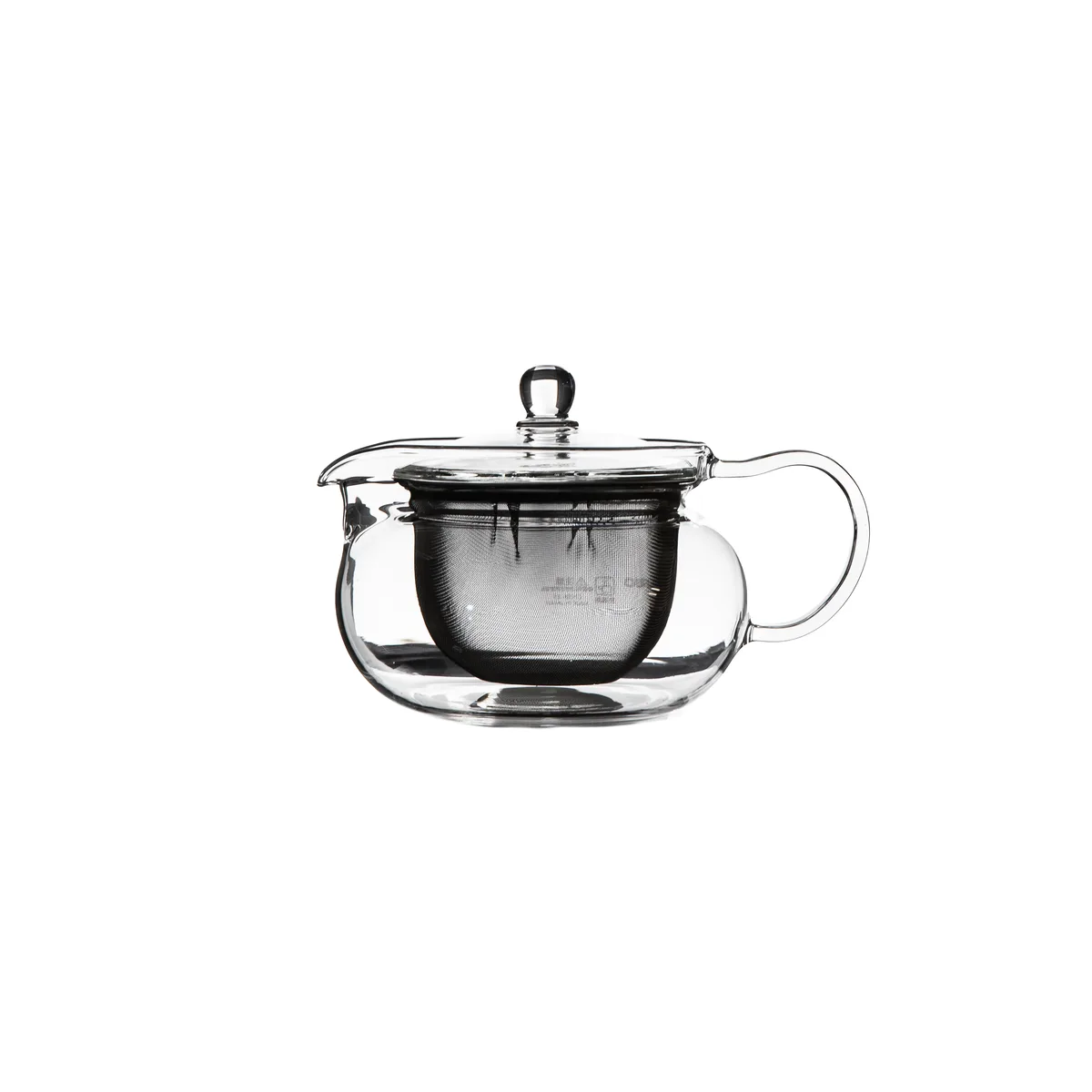
Glass: clear, straightforward, easy to inspect
Glass pots show the color of the infusion and the opening of the leaf, which is a genuine pleasure and a useful cue when you are learning a new tea. They do not hide stains as well as an opaque pot, which is also a reminder to wash them. Heat loss can be quicker than in a heavy pot, so a glass pot is often happiest for a tea you will pour out on time, including many everyday western steeps and some gongfu-style sessions in small glass vessels.
Buy heat-safe glass that is officially sold as a teapot, with a lid that fits and a strainer you can clean. Official Hario-style glass kyusu and leaf pots in our 2026 researched list are examples of this idea. Do not put a random jar on a burner and call it a kettle. Glass is usually the easiest material to inspect for residue, and it does not ask you to dedicate the pot to a single style of tea.
A gooseneck helps you fill a small glass pot without a splash; see how to choose a gooseneck kettle.
Clay: a habit, not a superstition
Clay pots, including Yixing-style unglazed pots and many glazed ceramic pots, are loved for heat retention and, in the unglazed case, for a surface that can pick up a little of the tea you always brew in them. That last point is a reason people sometimes keep one unglazed pot for one family of teas — a habit, not a proven laboratory upgrade, and not a reason to skip washing obvious residue. Follow official care for the pot you bought. Some clay is not for a dishwasher, a soapy soak, or a sudden temperature shock.
Glazed ceramic is the more forgiving everyday clay: a mug-like interior you can wash, a wide range of sizes, and no need to “assign” the pot unless you want to. If a handmade pot has an unknown lining or an unknown source, prefer a current official food-safe piece for daily use.
Clay does not replace good water, fresh leaf, or a timer you glance at. If a pot is hard to clean, you will use it less. A small clay pot can be a pleasure for oolongs you already like; it is a poor first and only pot if you also want a big pot of breakfast black for guests.
Cast iron: heavy, hot, and usually lined
Decorative cast-iron pots are often enamel-lined. The lining is the official tea-contact surface; do not assume bare iron is appropriate for brewing, and do not chip the enamel and keep using it as if nothing happened. Official care usually means no dishwasher, no sudden ice-water shocks, and no empty pot forgotten on a burner. Some pieces are teapots, not kettles; heating them empty or on the wrong stove can be a safety problem. Read the official page.
Cast iron is heavy and holds heat. That can be lovely for a table that sits a while, and clumsy for a small household that wants a light pot and a clear look at the leaf. Rust, if it appears on an unlined or damaged surface, is a retire-or-refinish official-care question, not a flavor bonus we will romanticize.
None of these materials makes the kettle unnecessary. Heat water in a kettle, steep in the pot. See electric vs stovetop kettles and descaling kettles and cleaning teapots. For storing the leaf, the pot is not a tin; see how to store tea.
A fair way to choose
If you want one first pot, a clear glass or a simple glazed ceramic pot with a good strainer is the straightforward path. Add a small clay pot later if you have a tea you brew often and you enjoy the care. Choose officially lined cast iron only if you like the weight and will follow the care sheet. Size still beats romance: a pot that holds what you drink, with room for the leaf to open, is the right pot.
FAQ
Will a clay pot “make cheap tea taste expensive”? No. A clean pot and appropriate water temperature help any leaf. They will not invent a better harvest.
Can I brew coffee in my tea clay pot? You can, and the pot may then smell like coffee. If you care about tea aroma, do not.
Is glass safer than clay? Buy official food-safe pieces in either material. Unknown antiques are a different, more cautious story.
Do I need a wrapping cloth or a tea tray? Only if you enjoy that style of brewing. They are not required for a weekday glass pot.
Choose glass or glazed ceramic for an easy first teapot, clay if you want a dedicated small pot and will care for it, and officially lined cast iron if you want weight and heat and will protect the enamel. Confirm official care, wash what the maker says you can wash, and let the leaf — not the folklore — run the session.