
The vessel does not have to be beautiful. It has to give the leaves room, let you stop the steep, pour without a mess, and come clean in a weekday sink. A basket infuser in a mug can be a complete setup. A small pot is a pleasure when you want a second cup or you are pouring for two. A tight mesh ball that crushes the leaf is the piece most people should skip.
Mug baskets and everyday infusers
A deep basket that sits in a mug, with a lid if you have one, is the fastest way to brew loose leaf on a workday. The leaves can open, you lift the basket when the time is up, and you only wash one extra object. Look for a mesh fine enough to hold small leaf, a handle or rim that does not scald, and a basket that is tall rather than shallow.
If you only drink one mug, you may never need a larger pot. That is a reasonable stopping point, not a lack of seriousness.
Small teapots, materials, and size
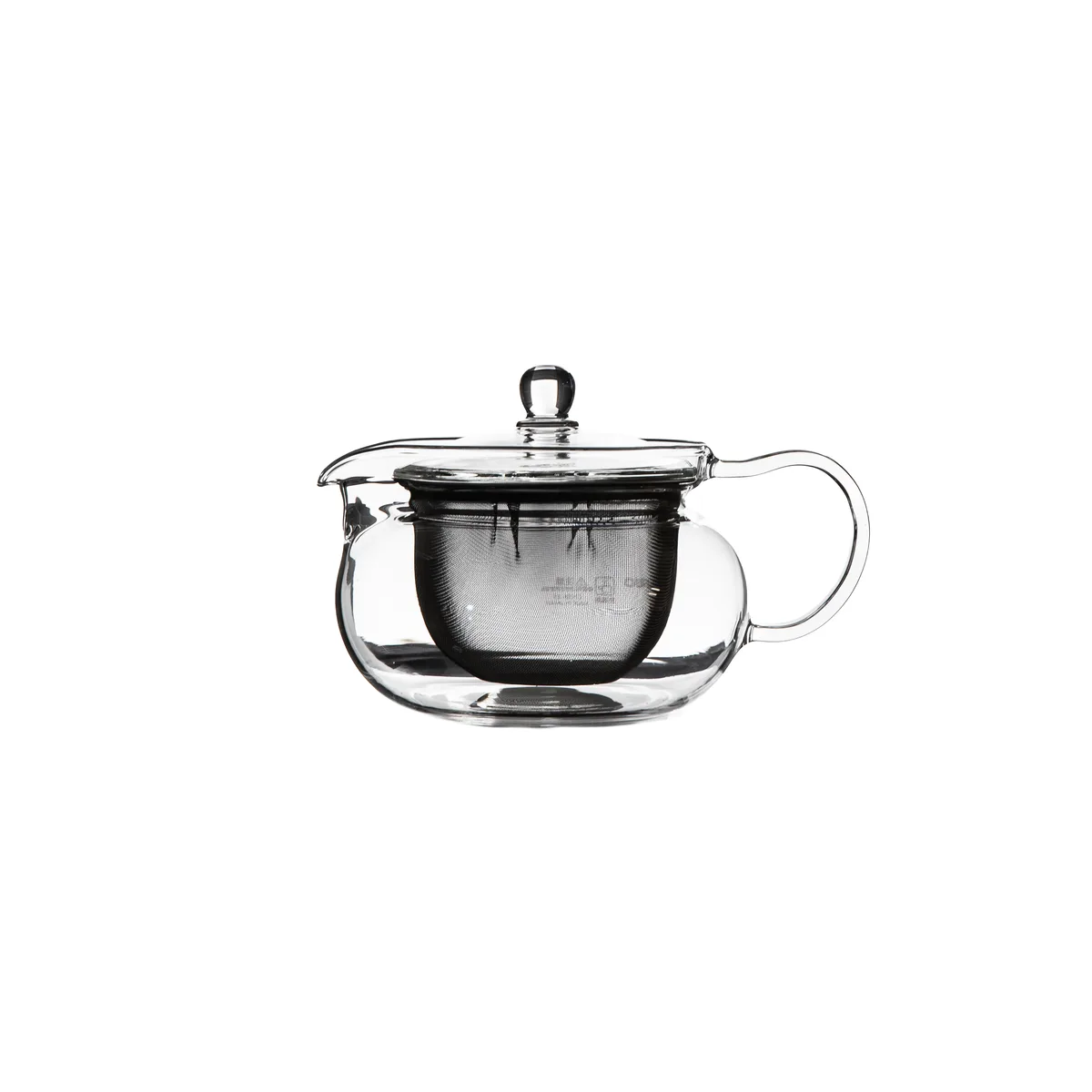
A small pot — enough for two modest cups — is useful if you like a second steep or a shared pour. Glass lets you watch the leaf; ceramic holds heat; some people like a small iron or clay pot for a particular style, with more care and more weight. Choose a size you will fill. A large ceremonial pot that you half-fill with one mug’s worth of water makes brewing harder, not more authentic.
A built-in strainer in the spout can be enough if you add leaf loose; an insert basket is easier to lift and clean. A gooseneck kettle is a nice pairing for a small pot because the pour is easier to control, but it is not required.
Filters, bags you fill yourself, and cleaning
Paper filters or empty fill-your-own bags are a tidy option at a desk or when you do not want to wash a basket. They can mute aroma a little and add waste, and they are still a valid choice. Reusable cloth filters need thorough rinsing so they do not hold sour smells.
Wash whatever you use with ordinary hot water and a little unscented soap if needed, and dry it so it does not sit wet in a cupboard. Tea oil builds up; a neglected mesh is a common source of “why does everything taste like yesterday.” Avoid abrasive pads on a nonstick or a delicate clay surface, and do not put a fragile pot through a heavy dishwasher cycle unless you know it will survive.
Buying one piece, not a set you will not store
Start with the one tool that matches how you actually drink: a mug basket for one cup, or a small pot if you pour for two. Add a second piece only if the first is in daily use. Skip novelty pots that cannot be cleaned, and skip a twelve-piece set for a person who wanted a simpler morning.
Pouring, sharing, and living with the piece you bought
Practice a pour over the sink once if a new pot dribbles. A poorly designed spout will stain a counter and sour you on the tool. If the lid falls in when you tip, that is a design problem; return it if you can, or hold the lid like a person who has done this before, without apology. When you pour for two, warm both cups, and do not leave the leaf sitting in the pot if you wanted a first steep only; lift the basket or decant so the second cup is a choice, not an accident.
If you are washing up at night, empty the leaves while they are still wet and easy, and give the mesh a real rinse. A weekly deeper clean is enough for most stainless baskets; mineral spots on glass are a kettle and water issue as much as a pot issue. Store the piece dry and with the lid off or slightly ajar if it tends to smell closed.
Share the simple version with guests: the basket, the tin, a suggested time, and permission to drink it any way they like. You do not need to narrate oxidation. If a guest would rather have a bag, offer a bag if you have one. A pot is a household tool. It should make a weekday easier and a small visit kinder, and it should survive a life next to the kettle, not a life in a display cabinet you are afraid to touch.
A good infuser or a small pot earns its counter space by making loose leaf as easy as a bag, with room for the leaf and a way to stop the steep. Buy one piece you will wash, match the size to the cups you actually pour, and keep it clean enough that the next tea still tastes like itself. The rest of the shelf can stay empty until a real habit asks for something more. If you have not used the pot in a month, wash it once more and put it back in easy reach, or admit that the mug basket is your real everyday tool and let the larger pot be for guests.
Official teapots and dripper sets are compared in the best tea kettles and brewing tools of 2026. Cleaning notes are in descaling kettles and cleaning teapots.