
An electric kettle heats on a base; a stovetop kettle heats on a burner. Both can make excellent tea. The useful differences are how precisely you can hold a temperature, how the kettle pours, what kind of stove or outlet you have, and how you will clean scale. This is a comparison, not a lab race, and we will not invent boil times or energy figures. Official wattage, stove compatibility, and capacity belong on the current product page.
What both kettles have to do
A tea kettle should heat water, pour without a mess, and come clean. Temperature still matters more than the power source: a rolling boil is a simple default for many black teas, while many greens and delicate oolongs do better cooler. That is the same advice as kettles and water temperature, and it applies whether the heat comes from a coil or a gas flame. Water quality matters too; see water quality for better tea.
If you already brew well with a basic kettle and a short wait off the boil, you do not have to upgrade. Buy a new kettle because your current one is unsafe, slow to the point of annoyance, scale-clogged, or a poor pour — not because a catalog says you need a ritual.
Electric: hold, repeat, and stay off the stove
Electric kettles, including temperature-controlled goosenecks, are convenient when you want a set point and a hold, or when you do not want another pan on the stove at breakfast. A good official hold function is the feature that actually changes a weekday green tea. Variable temperature without a reliable readout is less useful than a simple kettle plus a moment of waiting.
Tradeoffs are real. You need a safe, dedicated spot for the base, an outlet that is not a tangled hazard, and enough official capacity for the pot you actually use. Some electrics are gooseneck; some are wide-spout household kettles that splash more. If pour control is the job, the spout shape matters as much as the plug. See how to choose a gooseneck kettle.
Electric kettles still need descaling. Hidden heating elements and tight lids can make that job fussier if you ignore it. See descaling kettles and cleaning teapots. Follow official fill lines; a boil-dry protection exists because people forget.
Travel and dorm life often favor electric if the official voltage matches the country you are in. A U.S. kettle on a different grid is a separate, official-compatibility question, not a guess.
Stovetop: simple heat, with a flame or coil you already have
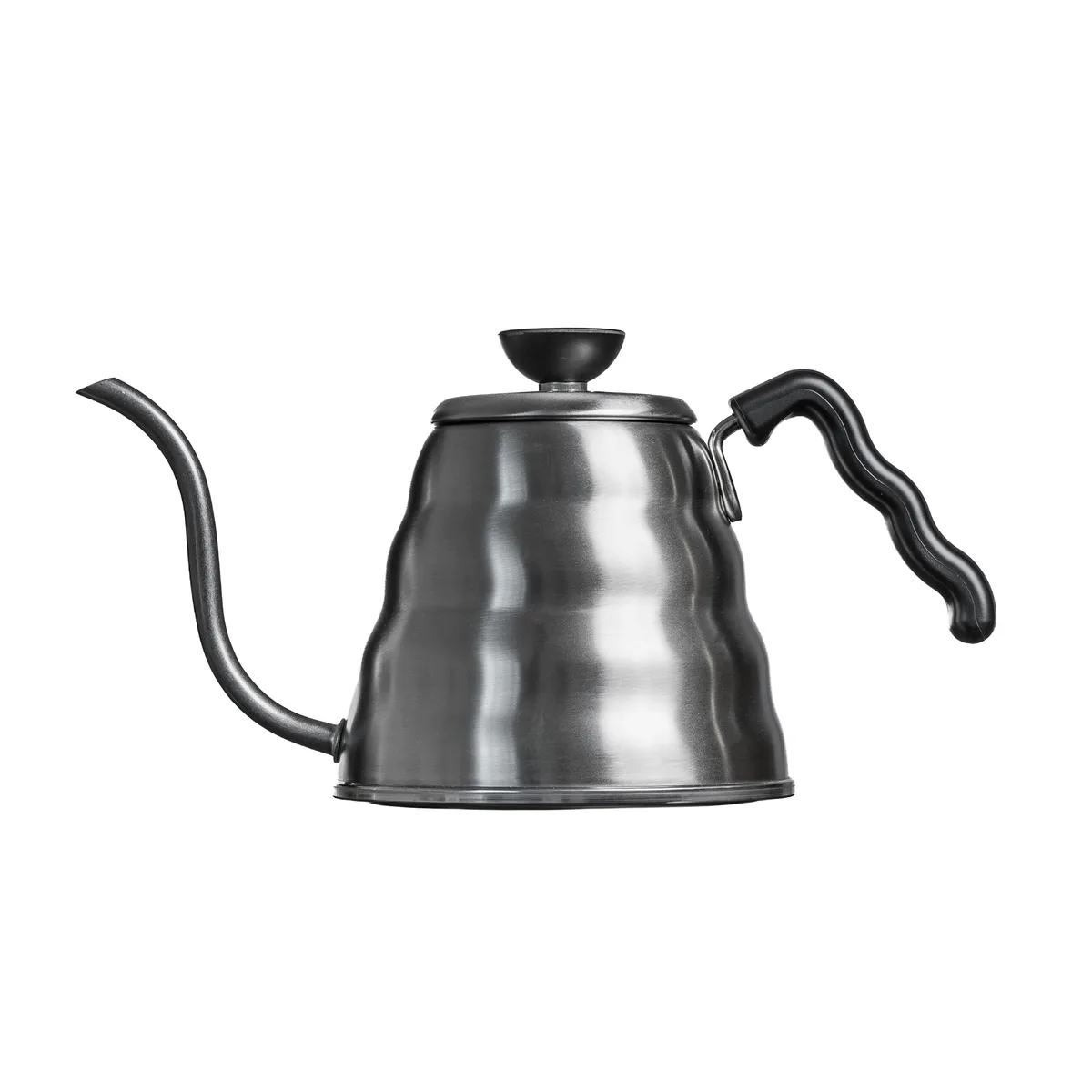
A stovetop kettle is a pot with a lid and a spout. It can be inexpensive, repairable in the sense that there is no base to fail, and a natural fit if you already stand at the stove. A gooseneck stovetop model, such as official Buono-style kettles in our 2026 researched list, is a common choice for people who want pour control without another appliance on the counter.
You supply the temperature habit: pull it off the heat, or use a thermometer, or learn a short wait. That is easy once it is a habit, and it is easier to mess up when you walk away from a roaring burner. Official stove notes matter — some kettles are not for induction, some handles are not for a tight, high-power gas jet, some interiors are not broiler-proof in any sense. Read the official page for the exact model.
Whistling kettles tell you about a boil, not about a 175°F green-tea target. If you only brew sturdy blacks, a whistle may be enough. If you brew greens often, a thermometer or an electric set point will save you guesswork.
A kettle is not a teapot. You still need a vessel that gives the leaf room, which we cover in teapots, infusers, and filters and in clay vs glass vs cast iron teapots.
Safety, scale, and a fair way to choose
Keep cords and handles where a child or a passing elbow cannot dump boiling water. Do not fill past the official line. Do not use a chipped electric kettle or a loose, burned stovetop handle. Scale is not a flavor bonus; descale on a schedule that matches your water.
Choose electric if you want hold, repeatability, and a free burner. Choose stovetop if you want a simpler object, a gooseneck without a base, or you dislike another plug. Many homes can justify one well-chosen kettle, not one of each. Current official electric and stovetop models are in our 2026 list of tea kettles, described as researched picks, not as timed tests in your kitchen.
FAQ
Is a temperature-controlled electric “required” for good tea? No. It is a convenience for teas that prefer cooler water, and a repeatability tool.
Can I put an electric kettle on the stove in a power outage? No. Use a stovetop kettle or a pot.
Does metal vs glass change the taste? Cleanliness, water, and leaf matter more. Glass shows the boil; metal hides scale until you look. Official materials and liners vary — read the page.
Which is faster? It depends on wattage, volume, and the burner. We will not invent a winner. Heat only the water you will use.
Electric vs stovetop is a workflow choice. Pick the heat source that matches your stove or outlet, the spout you will actually pour with, and a kettle you will descale. Temperature habit still makes the cup, whichever way the water boils.
One kettle, or a household split
If two people brew at the same time, a larger official capacity or a second simple kettle can be more useful than an argument about brands. A temperature-controlled electric for greens plus a stovetop backup for guests is a luxury setup, not a requirement. Most apartments do better with one kettle that both people are willing to descale.
If you rent, prefer a kettle you can take with you. A heavy stovetop piece travels; an electric base needs its official cord and a box. For gifting, a returnable official model is kinder than a unique color that cannot go back; see tea for gifting.