
“Gongfu” and “Western” brewing are not moral camps. They are two ways of using leaf and water. A Western pot uses more water, less leaf, and a longer steep, usually once or twice. A gongfu session uses more leaf, much less water, and a series of short steeps in a small pot or gaiwan. The same bag of oolong can taste like two different teas in those two setups, which is interesting and also not a reason to throw out the mug you already like. This guide is a practical comparison, not a ceremony manual, and not a lab test.
What each method is actually asking of you
Western brewing is the method most kitchens already know: a teaspoon or a tablespoon of leaf in a basket or a pot, a mug’s worth of water, three to five minutes, and a cup you can walk around with. It is how breakfast tea, many herbal infusions, and a lot of weekday green tea get made. It is also how tea gets bitter if the leaf sits in the water while you answer the door.
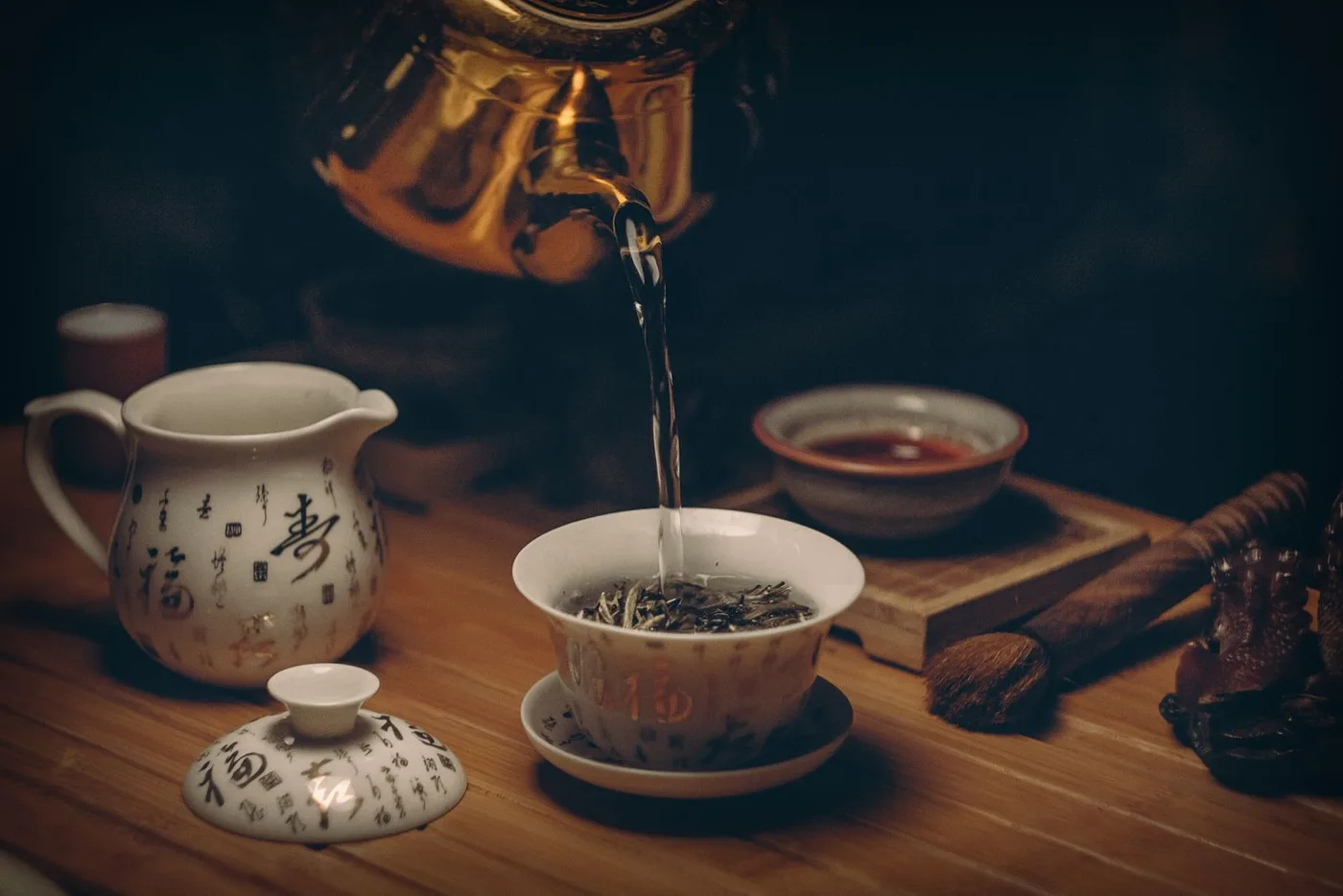
Gongfu brewing, in the home sense, is a small vessel, a higher leaf-to-water ratio, and a series of short pours — often seconds, not minutes — into a fairness pitcher or directly into small cups. You taste the same leaves as they open, steep after steep. It asks for attention and for a place to sit, and it uses more leaf at the start, though that leaf is meant to be reused through the session. It is a poor fit if you want a travel mug for the train.
Neither method requires a cabinet of antiques. A Western pot can be a simple glass teapot with a basket. A gongfu setup can be a modest gaiwan, a small pitcher, and a cup. Current official kettles and pots are in our 2026 researched list.
Leaf, water, time, and temperature
The variables are the same; the proportions change. Western brewing often starts around 2 to 3 grams of leaf per 8 ounces of water, with time doing more of the work. Gongfu brewing often starts with a vessel that looks “too full” of leaf and a pour that is surprisingly short. If you copy a gongfu leaf amount into a large mug and steep it for five minutes, you will not like the result, and that is not the tea’s fault.
Temperature still matters, which is why a kettle you can actually set — or at least a kettle you can pause before a full rolling boil — is useful for green and some oolong teas. See kettles and water temperature and water quality for tea. Boiling water is right for many black teas and some herbals, and harsh for a delicate green. Official guidance on a bag of tea, when it exists, is a starting point, not a law.
Rinsing, or a very short first pour that you discard, is a common gongfu habit for some tightly rolled leaves. It is optional at home. It is not a hygiene ritual that replaces buying clean, well-stored leaf. If you skip it, just start with a short first steep and taste.
Vessels that help, and vessels that get in the way
A large mug with a roomy basket is a good Western tool and a clumsy gongfu tool. A small gaiwan or a small clay or glass pot is a good gongfu tool and a tedious way to make a 16-ounce breakfast cup. A fairness pitcher helps if two people are tasting the same steep, so the first cup and the last cup are not different strengths. A strainer helps if your pot’s lid is not tight enough to hold fine leaf.
You do not need a tea tray the size of a coffee table. You do need a place to pour without scalding a wooden desk, and a kettle that pours where you aim. A gooseneck helps for small vessels; a wider spout is fine for a big pot. We discuss kettles at more length in the buying guide on the 2026 list and in how to brew better tea.
When to use which, without making a project of it
Use Western brewing when you want one reliable mug, when you are making tea for a table of mixed preferences, or when the leaf is a simple breakfast blend that does not have much to say after the first pot. Use gongfu brewing when you have a tea you want to follow — a rolled oolong, a pu’er, a careful green — and you have twenty quiet minutes. Use a hybrid when you like: a small pot, a medium amount of leaf, and two or three steeps into a regular cup.
If you are just starting to taste teas on purpose, you do not have to begin with gongfu. A Western pot and a notebook will teach you more than a rushed ceremony. Our how to taste tea and starting a loose-leaf collection guides assume you can use either method.
Cleaning is part of the method. A pot that always smells like yesterday’s smoky tea will flavor today’s green, whether the steep was 10 seconds or 5 minutes. See descaling kettles and cleaning teapots.
The point is a cup you will actually drink. Gongfu is a way to see more of a leaf. Western brewing is a way to get a fair mug without a production. Learn both loosely, keep the leaf fresh, and let the day decide which one comes off the shelf.
Common mix-ups, and a way to practice without a lecture
People sometimes buy a small gaiwan, fill it like a Western pot, and steep it for five minutes. The result is harsh, and the method gets the blame. The other mix-up is to take a gongfu leaf dose, drop it in a travel mug, and cap it for a commute. That is a strong, often bitter extract, not a session. If you want tea for a commute, use a Western amount, a basket you can remove, or a bottle designed to separate the leaf.
A useful practice is to brew the same tea both ways on two evenings, not in the same hour when you are already full of caffeine. Keep the water the same. Write one line about each cup. You may find that a simple black tea does not repay a dozen short steeps, and that a rolled oolong tastes muted in a large basket. That is information, not a failure of either method.
If you share a kitchen, keep the gongfu tools on a tray so they are not a scatter of lids. If you live alone and only want a mug, you have permission to ignore the tray entirely. The better method is the one that results in a cup you finish. Tools from the 2026 researched list will serve either style; the habit is what changes.